

In the last three months, every client meeting I've walked into has had the same question waiting for me.
"We asked ChatGPT about [our category] and we're not showing up. Why?"
It started with one CMO in December 2025. By February this year, it was nearly every conversation. Marketing leaders across Singapore and Southeast Asia are opening ChatGPT, Perplexity, or Gemini, searching for their own company or category — and finding competitors cited instead.
The panic is real. And honestly? It should be.
The AI shift isn't just changing where your buyers search. It's changing how we do the work of search optimisation itself. Both sides are moving simultaneously — how buyers find you AND how you optimise for them.
I've spent the last six months rebuilding our SEO delivery model, with Luis and the team, around this reality. This article is what I've learned from that process and from the client conversations driving it.
The Buyer Side: Your Buyers Don't Start on Google Anymore

Think about how you planned your last holiday. If you're like most people I know, you didn't start on Google. You asked ChatGPT for destination ideas. Checked Instagram to see what the place actually looks like. Read reviews on TripAdvisor or Google Maps. By the time you visited the hotel's website, you'd already decided whether you wanted to stay there.
That's a consumer purchase. Now consider what's happening in B2B.
Gartner says the average B2B purchase involves 6-10 decision makers.² In most companies I work with, the senior leaders still make the final call — but they're not the ones doing the initial research. The marketing manager building the vendor shortlist, the analyst comparing platforms, the associate pulling together options — they're increasingly millennials and Gen-Z. And they research vendors the same way they research everything else: ChatGPT for the initial list, LinkedIn and Instagram to check if the brand is real, G2 or Google Reviews to validate.
By the time a vendor's name reaches the VP's desk, it's already been filtered through three or four platforms that most B2B companies never optimise for.
Gartner predicts that by 2026, traditional search engine volume will drop 25% as AI chatbots and virtual agents absorb more research tasks.¹ For B2B — where buying cycles are long and research-heavy — I'm already seeing this play out in client data. One B2B SaaS client in Singapore saw organic traffic to their top service pages drop 19% year-over-year — while their Google rankings held steady. The searches were still happening. The clicks just weren't coming through to their site.
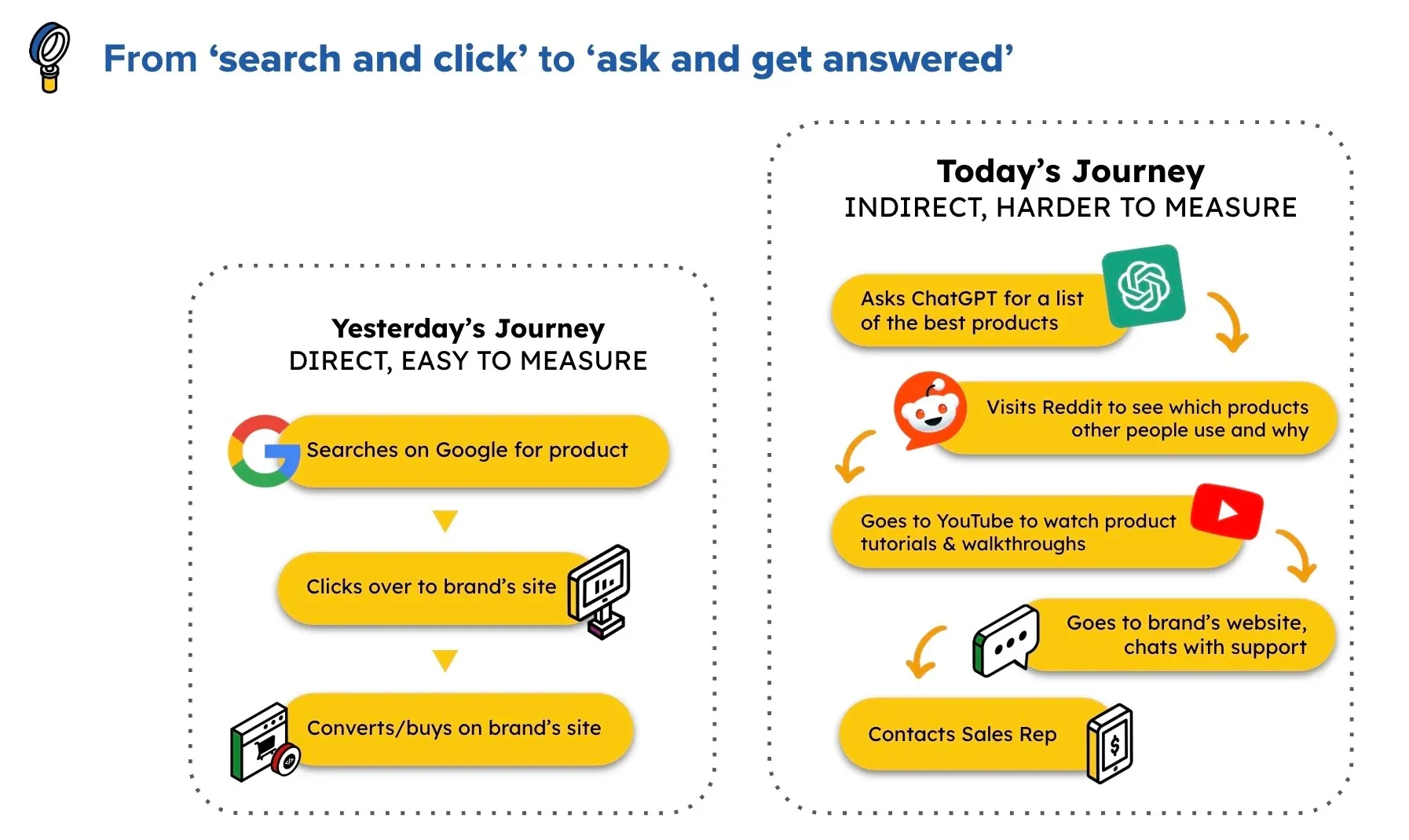
What I find most important about this shift: the platforms where buyers and practitioners discuss your brand — social media, review sites, industry forums, YouTube — are the same sources AI models pull from when generating answers. A brand with strong G2 ratings, an active LinkedIn presence, and mentions across industry publications is more likely to be cited when someone asks ChatGPT for vendor recommendations. The visibility compounds: your presence on these platforms feeds directly into your AI search results.
This is Generative Engine Optimisation — GEO. It sits on top of traditional SEO, not instead of it. Where SEO optimises for Google's ranking algorithm — keywords, backlinks, technical performance — GEO optimises for how AI models understand, trust, and cite your brand:
- Entity recognition — Does the AI know your brand exists and what you do? Not just from your website, but from mentions across social media, review platforms, industry publications, and structured data.
- Content structure — AI models favour content that's clearly structured, factually specific, and easy to extract. Concrete methodology, named frameworks, and specific results get cited. Vague marketing copy gets skipped.
- Authority signals — How often and in what contexts your brand appears across the sources AI models index. Social media presence, review site ratings, forum discussions, and third-party references all feed into your AI visibility.
I tested this with a client last quarter. They rank on page one of Google for their primary keyword in Singapore. When I searched the same term in ChatGPT, they were mentioned — but buried mid-response, not recommended. In Perplexity, they didn't appear at all. A smaller competitor with a weaker Google ranking was the first brand cited in both. When I dug into why, the pattern was clear: that competitor had strong G2 reviews, an active social media presence, and mentions across the platforms AI models actually pull from.
Strong Google position, weak AI visibility. I'm finding this gap across most B2B companies I work with in the region — and most don't realise it until someone shows them.
The Delivery Side: AI Is Transforming How SEO Gets Done
I don't think AI search will kill SEO. Google is adapting fast — AI Mode already merges search and chat into one experience, and I expect most users will gravitate toward that familiar single platform rather than switching between Google and ChatGPT for every query. So SEO isn't dying. But the way we deliver it is being completely rebuilt.
At Construct Digital, I've spent the last six months rethinking our delivery from scratch — not adding AI to existing workflows, but asking whether those workflows should exist at all.
The biggest shift has been in technical audits. We've always taken a comprehensive approach — not just crawling a website, but pulling data from PageSpeed Insights, Google Analytics, Search Console, and SEMrush, then cross-referencing everything to build a complete picture. Before AI, that meant an SEO specialist spending more than a week manually gathering data from five platforms to build a complex Excel — over 20 tabs, mad formulas, a file I truly hated working with — before synthesising findings, running analysis, and building a client-ready presentation.
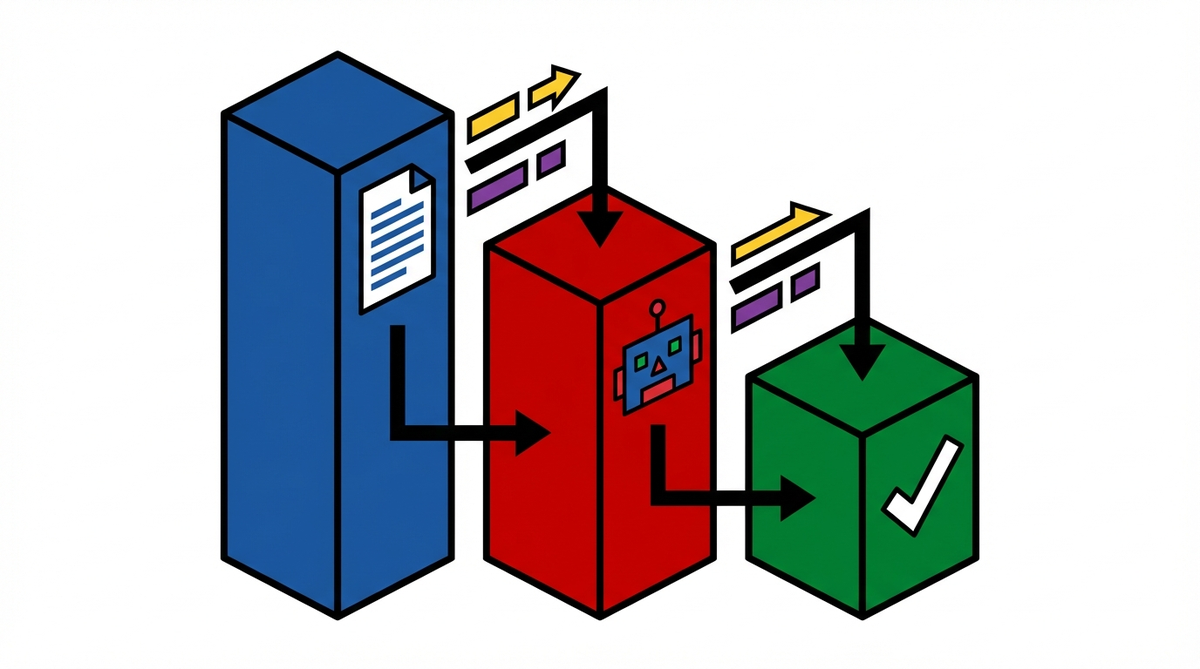
Today, my team has built a Claude-powered agent with our own SEO audit framework embedded in it. The agent connects to PageSpeed, Analytics, Search Console, and SEMrush automatically — pulls the data, analyses it against our framework, and builds a branded deck with findings and recommendations. Luis and the team then review the output, validate against the raw data, and polish off the client deck. A comprehensive technical audit of a large enterprise site that used to take over 6 man-days now takes 2 man-days — and those 2 days are spent on review, validation, and strategic recommendations, not data gathering.
Building this wasn't simple. Claude handled the technical integrations — API connections, data extraction, formatting — which was important because marketers aren't developers. But my team had to do something harder: articulate our audit framework clearly enough for an agent to apply it. What matters in an audit. What each data point means. What you can infer from the patterns. What to recommend. That's years of Luis's experience as an SEO specialist, codified into a system that can now execute in a fraction of the time.
The specialist isn't replaced — their judgment is amplified.
The same pattern applies across our other SEO workflows:
Keyword research — If you've seen those Instagram videos showing marketers asking ChatGPT for keyword lists, that's not what I'm talking about. AI giving you its opinion on keywords isn't research — it's guessing. At Constuct, we still pull real search data from Google Search Console, Keyword Planner, and SEMrush. What's changed is what happens next: instead of manually building a massive Excel with keywords mapped across buyer journeys, AI automates the data pull, clusters keywords around topics, and generates a master list with verified search volumes and intent signals. My team then applies their knowledge of the brand, the target audience's behaviour, and the competitive landscape to develop a final recommended keyword strategy. Real data in, AI-assisted synthesis, human judgment out.
Content briefs — This connects directly to keyword research. Once we have an approved keyword list, an AI content agent thinks through the best way to plan content for those target keywords and generates a detailed brief — heading structure, key points, internal links, semantic keywords — for our human writers to develop SEO-optimised content that actually resonates with the target audience. No more manually building briefs one page at a time.
The economics are straightforward: the cost of doing SEO well is dropping, but the skill required to direct it strategically is increasing. Junior execution is being automated. Senior judgment is becoming more valuable. As I like to say — AI doesn't have taste. It doesn't have the instinct that someone senior at an agency develops over a decade of understanding human behaviour and what actually resonates with an audience. That's still the differentiator.
Why This Matters More for B2B
B2B isn't B2C. When a consumer searches for "best running shoes," they'll scroll through ads and reviews regardless of the format. When a VP of Marketing in Singapore researches "enterprise marketing automation platforms for Southeast Asia," they start with AI for a synthesised shortlist — but they don't stop there. AI answers aren't fully trusted yet. Buyers still go to LinkedIn, review sites, and peer networks to verify what the AI told them. That verification loop is exactly why your presence across these platforms matters: it's where trust gets built, and it's what feeds back into AI credibility.
Three things make GEO disproportionately important for B2B:
1. Longer research cycles mean more AI touchpoints. B2B buying journeys involve 6-10 stakeholders researching over weeks or months.² Each stakeholder is now likely to consult AI at some point during that process. If you're not in those AI answers at the research stage, you won't make the shortlist.
2. Higher deal values justify the investment. A single enterprise deal in Southeast Asia is worth $50K-$500K+. The ROI of appearing in AI-generated vendor comparisons at that deal size is enormous. Even one additional qualified opportunity per quarter pays for the effort many times over.
3. B2B buyers value structured thinking. AI models cite brands that demonstrate clear methodology, frameworks, and structured approaches — exactly what B2B companies should be publishing anyway. If you have a genuine methodology (not just marketing fluff), GEO rewards you for it. At Construct, our IMPACT framework is already showing up in AI answers precisely because it's structured, named, and documented.
What We're Doing About It

I'm sharing my playbook because the market opportunity is large enough that raising awareness benefits everyone. And most clients in Singapore and Southeast Asia haven't started.
We treat SEO and GEO as two layers of the same strategy. Every piece of content my team produces is optimised for both: traditional search ranking AND AI citation. Structured content with clear entity references, specific data points, and named frameworks. No more vague "we deliver results" copy.
We audit AI visibility alongside traditional rankings. For every client, I now run a separate workstream: does your brand appear in AI-generated answers for your target queries? Which competitors appear instead? What content do AI models cite? I check across ChatGPT, Gemini, and Perplexity — each surfaces different results.
We use AI to deliver SEO faster. Technical audits, keyword research, content briefs, and reporting all run through AI-assisted workflows. The strategist who used to spend Monday assembling a report now spends Monday analysing what the report means and deciding what to do next. Same team, higher output, better strategic depth.
We're building automations that compound. A keyword clustering tool feeds into a content brief generator, which feeds into an editorial calendar, which feeds into performance tracking. Each automation makes the next one faster. The system gets sharper with every iteration.
What You Should Do This Week
If you're a B2B marketing leader in Singapore or Southeast Asia, here's where to start:
1. Audit your AI visibility (30 minutes). Open ChatGPT, Gemini, and Perplexity. Search for the 5-10 queries your buyers actually use when evaluating vendors like you. Document which brands appear in the AI answers. Are you there? Are your competitors? This is the fastest way to understand the gap.
2. Review your content for citation-readiness. Pull up your top 3 service pages. Ask: does this page have named frameworks, specific numbers, and clear methodology? Or is it vague marketing copy that an AI model would skip? AI cites specifics. "We helped a client reduce CPL by 68% in 90 days" gets cited. "We deliver world-class results" doesn't.
3. Strengthen your entity presence. Your brand needs to exist clearly and consistently across the web — not just on your own site. Industry directories, structured data markup, consistent NAP information, active profiles on platforms AI models index. Think of it as building your brand's "AI footprint."
4. Ask your SEO agency the right question. Not "are you using AI?", everyone says yes. Ask: "How specifically has AI changed your delivery in the last 6 months? What do you automate now that you did manually before? How are you measuring our visibility in AI search?" The specificity of the answer tells you whether they're doing the work or just talking about it.
5. Start now, not when the tools are perfect. GEO measurement is immature. Best practices are still forming. That's exactly why now is the time to move. Brands that establish AI visibility early will be the ones AI models learn to trust and cite — creating a compounding advantage that late movers can't easily replicate.
The Early-Mover Advantage Is Real
AI capability is doubling every few months.³ The models are getting better at understanding which brands are credible, which frameworks are real, and which content is worth citing.
Traditional SEO took a decade to become a mature discipline. GEO will mature much faster because the technology driving it improves at an exponential pace. The agencies and teams that treat this as a "2027 problem" will find themselves competing against brands that locked in their AI search positions two years earlier.
At Construct Digital, I've made the bet. I'm rebuilding our delivery model around the assumption that AI changes everything, not just how buyers search, but how we do the work itself.
If you're running B2B marketing in Southeast Asia, I'd encourage you to make the same bet. The cost of starting early is low. The cost of starting late compounds every quarter.
Charanjit Singh is the CEO of Construct Digital, a B2B digital agency in Singapore. He leads the agency's AI-first transformation and the IMPACT B2B Marketing operating system.
Sources:
¹ Gartner, "Predicts 2025: Search Marketing" — projected 25% decline in traditional search volume by 2026
² Gartner, "The New B2B Buying Journey" — average B2B purchase involves 6-10 decision makers
³ Based on observed model capability improvements across GPT-4 → GPT-4o → o1 → o3 and Claude 3 → 3.5 → 4 series (2024-2026)
Assess Your IMPACT
Eighteen questions, about six minutes. See how your B2B marketing scores against the six pillars of IMPACT, and get a pillar-by-pillar report showing where your pipeline leaks.