
COMPASS Brand + Build · Singapore
Websites Built on Strategy. Not just Design.
COMPASS is the 7-pillar Brand + Build framework for enterprises tired of rebuilding every three years. UX Strategy, brand, and build under one team. Each phase earns its place before the next begins.
Who It's For
Built for the People Who Own the Website Problem

Head of Marketing / Marketing Director
You're accountable for website performance, but the site doesn't reflect your current positioning. Every content update is a developer ticket. Analytics was never configured for conversions. Leadership asks for ROI from the website and you don't have a confident answer. You've been here before: a redesign that looked great at launch and underperformed within six months.

IT Director / Head of Digital
You inherited a site on the wrong platform, with technical debt accumulating quietly. Plugins haven't been updated. Marketing can't make simple changes without your involvement. Security compliance is in the backlog. You know a rebuild is coming, but this time you want it built on a foundation that doesn't need replacing in three years.

CEO / GM
Your competitors' websites look like they belong to companies twice your size. Yours looks like it was last updated when your previous marketing lead was still around. You've approved two redesigns in five years. Neither delivered measurable business impact. You need a different approach, not another agency promising a beautiful launch.
The Problem
You Just Relaunched the Website. Three Months Later, Nothing Has Changed.
The Website Was Built Around Your Org Chart. Not Your Buyer.
Navigation mirrors departments. Services are grouped by how you're structured internally, not by what a visitor is trying to do. A prospect lands with a specific problem and hits a wall of corporate hierarchy. They can't find what they need because the site was organised for the people who built it, not the people who use it. This is the mistake that makes everything else go wrong. Fix the architecture, and half the other problems disappear. Ignore it, and no redesign will save you.
The Brand Disconnect
Your business evolved. Your website tells last year's story. Prospects can't figure out in five seconds what you do or why it matters. Service pages list features, not outcomes. The messaging was never grounded in audience research. It was written by committee, page by page, without a unifying narrative. Every section sounds like a different company.
The Performance Black Hole
Traffic arrives but doesn't convert. Bounce rate at 65%. Organic rankings declining. You can't diagnose what's broken because analytics was never configured for conversions. You're tracking page views, not outcomes. Leadership asks why organic dropped 30%. You're guessing. The site was launched without a measurement framework, so the most important question has no good answer: what's actually working?
The Developer Dependency Trap
You wanted to update a headline last month. It took two weeks and S$800 because it's hard-coded into a custom template. The CMS was chosen for the developer's convenience, not your team's capability. Every content change flows through an agency ticket. Content stays outdated. Campaigns miss launch windows. The website is a bottleneck that costs far more than it should.
The Security Time Bomb
IT sent another email about critical vulnerabilities. You added it to the "later" list. Plugins haven't been updated in a year. The privacy policy was last reviewed in 2019. Security gets deferred because the risk stays invisible until it isn't. Then it compounds every day nobody acts.
Enterprise Brands We've Built For






The Method
7 Pillars. Each One Fixes a Specific Mistake.
Most website projects skip the strategic foundation and jump straight to design. COMPASS exists to break that pattern. Each pillar addresses one of the seven most costly mistakes companies make when building or rebuilding a site. Together, they form the system that turns a website from a periodic expense into a compounding asset.
Clear Brand Alignment
Set the strategic foundation before a single word of copy is written. The most common website mistake is treating content as a copywriting project. Copy is what you say. Brand strategy is what you stand for, who you're speaking to, and what makes you the right choice. Depth scales to where you are: a narrative-direction pass for clients with brand sorted, a brand alignment review for clients who need messaging refined, or a full Brand Foundation Workshop with stakeholder interviews, audience research, and CVP work for clients starting from scratch. The site never gets designed until C is addressed.
Brand Strategy serviceOperable by Marketing
Build a website your team can actually run. A website your marketing team can't operate independently is a liability. We select and configure the CMS based on your team's actual capabilities. Modular templates make layout changes safe and fast. At handover, your marketing team gets a usage guide and a training session. They can create pages, update content, and launch campaigns without raising a ticket.
Meaningful User Experience
Design for how users navigate, not how your org chart is structured. Before wireframes are drawn, we map the user journey for each audience segment. JTBD mapping defines what each persona is trying to accomplish. Card sorting validates whether your proposed navigation matches their mental models. Usability testing happens before design is finalised, not after launch when changes are expensive.
UX Planning servicePlatform Fit
Choose the platform that fits your team, not just your brief. We assess your team's technical capabilities, content management needs, integration requirements, and three-year growth trajectory before recommending a platform. WordPress, Sitefinity, HubSpot, or other enterprise CMS. We calculate total cost of ownership, not just build cost. No more rebuilding in three years because the wrong platform was chosen for the wrong reasons.
Accountable Performance
Build measurement in, not on. SEO strategy and analytics happen at the architecture stage. Technical SEO foundations live in the codebase. Analytics is configured to track conversions, attribution, and user behaviour by segment. A/B testing is part of the CMS build. When the site launches, you can measure everything. Optimisation is continuous, not a quarterly scramble.
Security by Design
Embed security at build time, not after a crisis. SSL, OWASP-aligned hardening, PDPA and GDPR compliance, WCAG accessibility, and documented patch management. VAPT (vulnerability assessment and penetration testing) before launch, with remediation built into the timeline. Compliance documentation is current and evidenced. When IT runs the next audit, you have reports, not reassurances.
Sustainable Website System
Build for long-term health, not a successful launch. A website is not a project with an end date. We design post-launch maintenance into the engagement from the start: a 3-month warranty, then WebCare with quarterly patching across OS, CMS, and plugin level, CVE monitoring, and monthly reporting. The rebuild cycle is not inevitable. It's the result of treating maintenance as optional.
WebCare & MaintenanceProven Results
COMPASS in Numbers
Real outcomes from COMPASS engagements across enterprise clients in Singapore and Southeast Asia.
Increase in donations for NUS Giving after brand + build.
Above lead target for Duke-NUS (1,306 vs 466 planned).
Traffic increase for Kaplan — still a client 6+ years later.
Enterprise B2B websites shipped across Singapore and Southeast Asia.
The After State
Six Months From Now
This is what changes when the foundation is set right.

Your next quarterly review
You're showing conversion rate improvements, lead quality gains, clear attribution from website to pipeline. You're not defending. You're demonstrating.

Your next content update
Your team pushes it live in 20 minutes. No developer ticket. No two-week wait. No S$2,000 invoice.

Your next optimisation idea
You brief it Monday. It's live and testing by Wednesday. Results by Friday.

Your next leadership question
"How's the website performing?" You pull up the dashboard and show them. No scrambling for answers.

Your next compliance audit
IT runs the check. Everything passes. No fire drill. No emergency fixes.
You're no longer managing a liability. You're managing a strategic asset. The website that used to drain your credibility is now building it.
How We Deliver
Two Phases. One Gate. You Decide What Happens After the Thinking.
Most agencies sell you the whole project up front, then discover the scope as they go. COMPASS runs in two phases with a hard gate between them. Phase 1 produces the thinking — and one artefact you can see, test, and take to your stakeholders. You only commit to the build once that artefact has earned it. The depth of Phase 1 scales to how complex your decision is; the build scales to how big your site is. The sequence below is the spine. Where it forks by engagement shape, we mark it.
The strategic foundation, and the prototype that proves it.
Everything in Phase 1 builds toward one thing: a designed prototype with your real narrative running through it. Not a strategy deck that sits in a drawer. Not lorem-ipsum wireframes. The thinking, made tangible — something you can click through and put in front of leadership before a line of production code exists.
Assess
Content audit, analytics review, technical and SEO read across all 7 pillars. You get a clear picture of what's working, what's broken, and what it's costing you.
Runs in every engagement. Stands alone as a diagnostic if you're not ready to commit.
Align on the Audience and the Story
Priority personas and jobs-to-be-done, then the narrative: who the site is for, what it stands for, why a visitor should care. This is the anchor everything downstream traces back to.
- COMPASS Lean One primary persona + narrative direction.
- COMPASS Core 2–3 personas and their JTBD, 4 in-person stakeholder interviews, and an in-person workshop to build the narrative.
- COMPASS Pro Adds a user survey and competitor benchmarking on top of Core, evidence where the stakeholder map is complex.
Architect the Experience
The core COMPASS move: structure the site around what visitors are trying to accomplish, not around your org chart. Navigation IA, reach paths, and the page structure that follows from the story.
- COMPASS Core IA validated against the personas.
- COMPASS Pro Card sorting and tree testing with real users before anything is designed.
Choose the Platform (runs in parallel)
We assess your team's actual capabilities, integrations, security posture, and three-year trajectory, then recommend WordPress, Sitefinity, HubSpot, or another enterprise CMS on total cost of ownership — not build cost alone. Evidence-based and documented.
Design the Prototype — Narrative Baked In
The convergence artefact. Real messaging in real pages, on the approved IA and brand direction. Narrative, content-migration direction, and design meet in one see-able prototype.
- COMPASS Lean Two directional homepage concepts.
- COMPASS Core A working prototype with homepage + 3 key pages, plus migration direction.
- COMPASS Pro Wireframes for the key pages, plus a working prototype with homepage + 5 key pages.
You Can Stop Here.
Phase 1 is a complete product, not a deposit on Phase 2. You walk away with the audit, the strategy, and a prototype your team can act on — build it in-house, hand it to another developer, or use it to make the internal case. Most clients go on to build with us because they've already seen what they're buying. That's the point of the gate: you commit to the build with the thinking in your hands, not on faith.
Production on the foundation Phase 1 set. Sized to your site, not a generic estimate.
Build and Harden
CMS implementation on the approved prototype, with analytics mapped to your business questions and technical SEO in the codebase. Templates are modular and editable, so your team can run the site without a developer ticket. OWASP-aligned development throughout, then VAPT and remediation before anything goes live. Build size is set by your site — Small (~30 pages), Standard (~100), or Enterprise (200+) — and that's where the build price comes from.
Launch and Sustain
Production deployment, cloud infrastructure if needed, plus a CMS usage guide and training so your operators can run it from day one. A warranty scaled to build size: one month for Small, two for Standard, three for Enterprise. Then WebCare: quarterly patching across OS, CMS, and plugin level, CVE monitoring, and monthly reporting. This is the step that ends the rebuild cycle. Maintenance is designed in, not deferred until the next crisis forces another rebuild.
Engagement Models
Three ways into COMPASS
Every engagement runs the same 7-pillar framework. What changes is the size and complexity of your site, and how deep the strategy and validation go with it. Pick the tier that matches your site, or start with direction and grow into the build.
Direction before you commit to a build, and the right depth for a smaller, focused site. The leanest Think layer of COMPASS: a full-site audit, one core persona, a narrative direction, and two homepage concepts that show the new positioning rendered.
Our recommended route, built for larger sites of up to around 100 pages. We get in the room with your stakeholders, map two to three audiences and their jobs to be done, and build the narrative with you, then prove it in a working prototype.
Everything in Core, with external validation for very large and complex sites where the stakeholder map and the stakes are highest. We test the strategy against real users before a line of the site is built.
Every route ends in a validated prototype. From there we build the live site, scoped to your platform and page count and quoted once the direction is locked. Design, CMS development, testing, deployment, training, and a warranty are all part of the build.
Client Results
COMPASS in Practice

NUS Giving
Brand concept and donation site built as one project, restructured around five giving pillars with a donor journey built to convert. Donations rose 45%.

Duke-NUS Medical School
A 1,000+ page rebuild on a reusable Sitefinity component library, with a recruitment campaign that repositioned the offer across three markets. Leads landed 280% above target at 82% lower cost per acquisition.
Kaplan Singapore
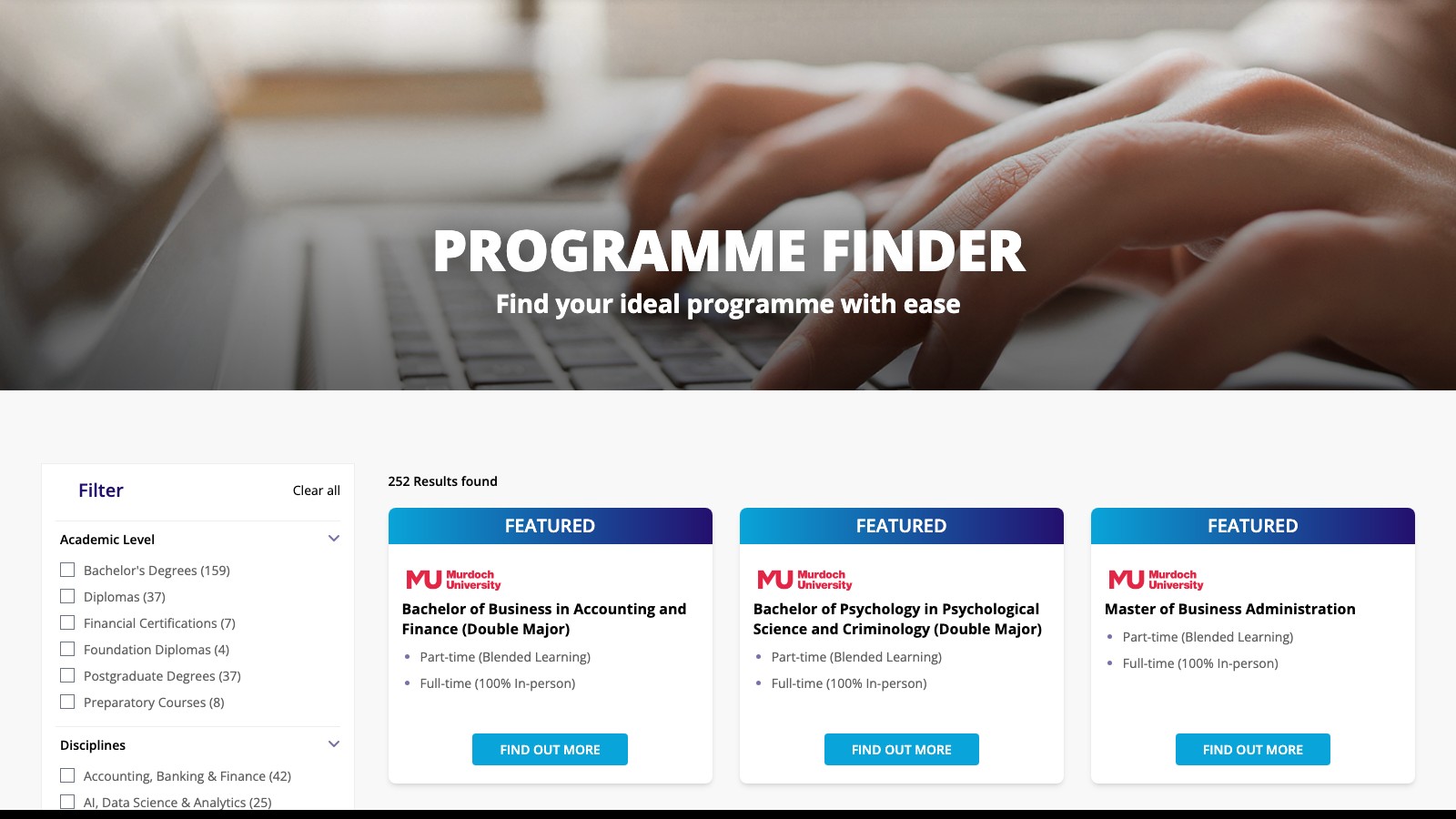
Persona-based entry points and a multi-filter Programme Finder for a multi-institution education provider. Traffic and time on site up 33%, and a relationship now past six years.
Testimonials
What Our Clients Say
While we've worked with Construct on several projects over the years, we most recently engaged them for the redevelopment of the Duke-NUS main website as well as our 20th anniversary microsite. They delivered with professionalism, creativity and responsiveness all the way from build to ongoing maintenance. It's been a constructive and dependable partnership, and the revamped website has seen clear growth in traffic.
I am very pleased with how the website turned out. It feels like we are a part of their in-house team working together to achieve the same goal. I've never worked with an agency but working with you feels like working with my own in-house team.
Your support and dedication throughout this project have been truly appreciated. You've been incredibly patient, helpful, and committed, and we're grateful for everything you've done to bring this project to life.
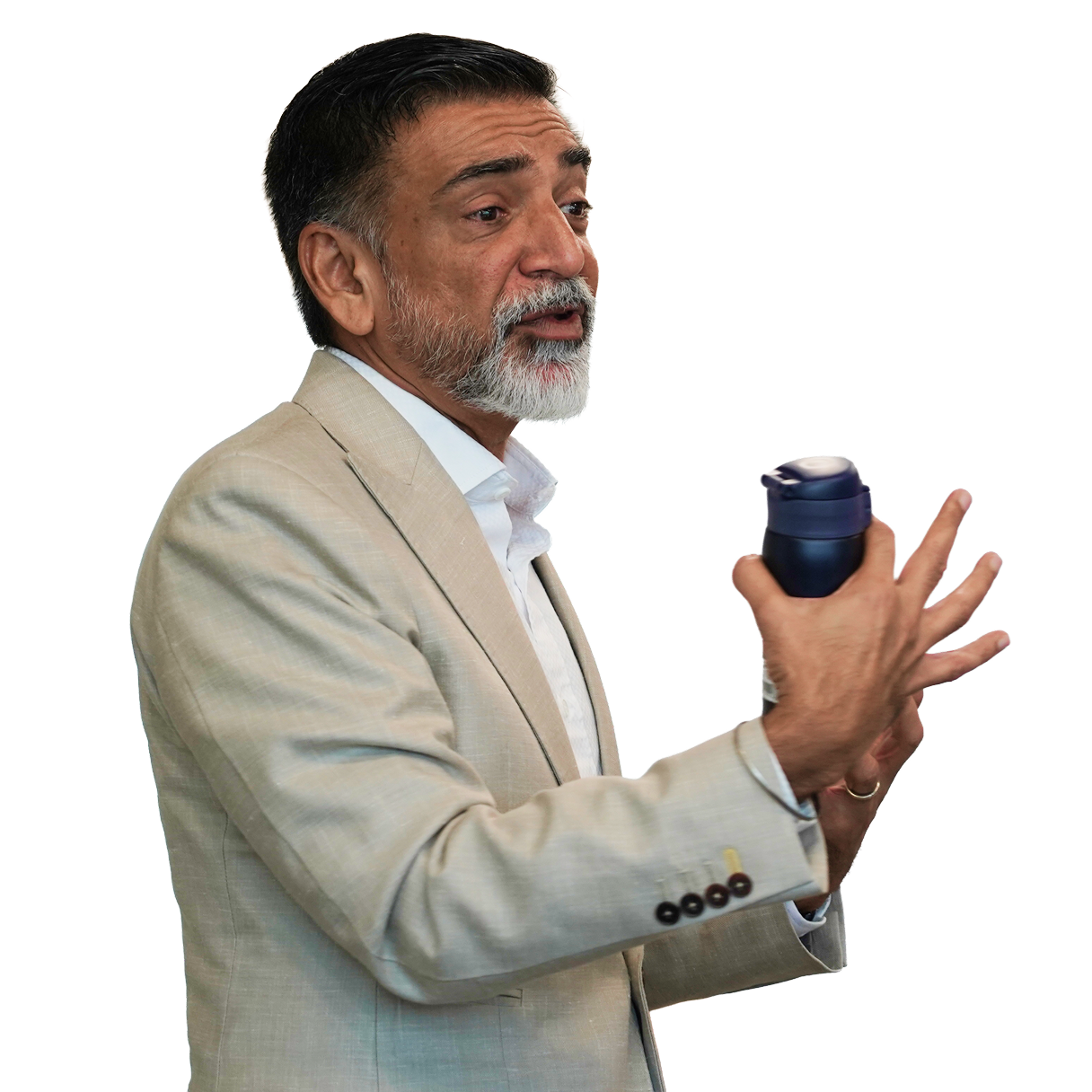
Built by
Charanjit Singh
CEO, Construct Digital
25 years building digital experiences across Southeast Asia. Built COMPASS after seeing the same failure pattern in hundreds of website projects.
The root cause was always the same. Companies design their information architecture around their organisational structure and ignore the needs of the visitor. Navigation mirrors the org chart. Pages are grouped by department, not by what the buyer is trying to accomplish. The site makes perfect sense to the people who built it and no sense to anyone else. Everything else follows from that mistake: confused messaging, developer dependency, no measurement, no maintenance plan.
COMPASS was designed to fix that. Seven pillars, each addressing one specific, recurring mistake. Applied to 200+ website projects across enterprise clients including Duke-NUS, NUS Giving, Kaplan, SGX, and ITMA.
Got Questions
COMPASS FAQs
Clear Brand Alignment, Operable by Marketing, Meaningful User Experience, Platform Fit, Accountable Performance, Security by Design, Sustainable Website System. Seven pillars, each addressing a specific mistake that causes websites to underperform.
A standard design brief starts with design. COMPASS starts with strategy. Brand positioning, audience journeys, platform fit, and measurement are all defined before any design decision is made. Most web projects skip this foundation, which is why most web projects underperform within 12 months of launch.
COMPASS Lean (from S$7,000) is strategy only, and the right depth for a smaller site: an audit, one core persona, a narrative direction, and two homepage concepts. Best when you want to validate direction before committing, or build internally with the strategy in hand. COMPASS Core is the full workshop-led engagement for larger sites of up to around 100 pages: in-person stakeholder interviews, a narrative workshop, two to three personas and their jobs to be done, and a working prototype of your key pages. COMPASS Pro is for very large, complex sites, adding external validation on top of Core: user surveys and advanced UX work like card sorting and tree testing, so the strategy is tested against real users before the build. Every route ends in a validated prototype; the live build is scoped and quoted once the direction is locked.
Both. Every COMPASS route produces the strategy and a validated prototype. From there we build the live site: design, CMS development, testing including VAPT, deployment, training, and a warranty. The build is scoped to your platform and page count and quoted once the direction is locked, so you commit to it knowing exactly what you're getting. WordPress by default, or an enterprise CMS like Sitefinity or HubSpot where it fits.
No. COMPASS applies to revamps, refreshes, and audits of existing websites. COMPASS Lean works as a standalone starting point — an audit and gap map against the seven pillars, identifying which foundations are in place and which are missing. You don't need to commit to a full build to get value from the framework.
We're platform-agnostic. WordPress, Sitefinity, HubSpot, or other enterprise CMS. We recommend based on your team's capabilities, integration requirements, and long-term operating needs. The Platform Fit pillar exists specifically because most agencies choose what they know, not what fits.
COMPASS Lean runs 3 to 4 weeks. Core and Pro run longer as the research and workshop depth increases, and the live build is additional, scoped to the size of your site. We set honest timelines upfront, and each engagement has defined gates and outputs at every stage, so you can walk away at any gate.
Yes. COMPASS Lean is our entry point — a full-site audit, a gap map against the seven pillars, a narrative direction, and two homepage concepts, from S$7,000 in 3 to 4 weeks. Many clients use it to build an internal business case before committing to a full build.
COMPASS is our Brand + Build framework. IMPACT is our B2B Marketing operating system. They're complementary: COMPASS builds the website, IMPACT fills the pipeline. For clients running both, the website is built to support the marketing programs from day one. COMPASS also draws on our Brand Strategy, UX Planning, and Web Design & Development services for clients who want to engage at the service level rather than the framework level.
Ready to Begin
Find Out What's Missing From Your Website's Foundation
Most websites underperform because the strategic foundation was never set. Start with a conversation. We'll diagnose where your site is leaking commercial value and recommend the right route, whether that's COMPASS Lean for direction or the full Core or Pro engagement with the build scoped on top. No pitch deck. Just an honest read.