
Brand Identity & Guidelines
A brand that's unmistakably you. On every touchpoint, every time.
We build visual identities for B2B distinctiveness: the logo, type, colour, and design language that make you recognisable. Then we codify it into AI-ready guidelines that your team and your AI tools can both apply, so every asset stays on-brand no matter where, or how, it gets produced.
The Problem
Most B2B brands are held together by habit.
Nobody decides to let a brand drift. It happens one deck, one brochure, one landing page at a time.
Every touchpoint looks like a different company made it.
The website says one thing, the sales deck another, and the event booth something else entirely. Each was made by a different person, at a different time, doing their best without a system to lean on. Individually they're fine. Side by side, they don't add up to a brand anyone could describe.
The brand guide exists, but nobody can work with it.
Somewhere there's a PDF: a logo, a palette, maybe a mission statement. What there isn't is an answer to the questions people actually have on a Tuesday afternoon. How does this look as a LinkedIn post? A webinar slide? A proposal cover? A guide that doesn't survive contact with real work isn't a guide, and the team quietly stops opening it.
You look like everyone else in the category.
Blue palette, abstract network graphic, stock photo of a handshake. B2B categories converge on the same visual language until buyers genuinely cannot tell one vendor from another, and the brand stops doing any of the selling. Being credible is table stakes. Being recognisable is the advantage, and sameness gives it away.
Identities we've built and kept consistent
The Method
How we build an identity
An identity that works is designed twice: once as a look, and once as a system your team can run. Four phases get you both.
Our Work
Identities in the Wild
SGX Cares
SGX's CSR story was largely untold. We created SGX Cares as a full sub-brand, with a mission, identity, and narrative rallied around one idea: "Better Happens Together".

NTU PACE
A brand refresh for NTU's professional and continuing education arm: narrative, personality, and tone of voice defined, then a full set of guidelines and visual assets so every team could carry the brand consistently.
NUS Office of Student Affairs
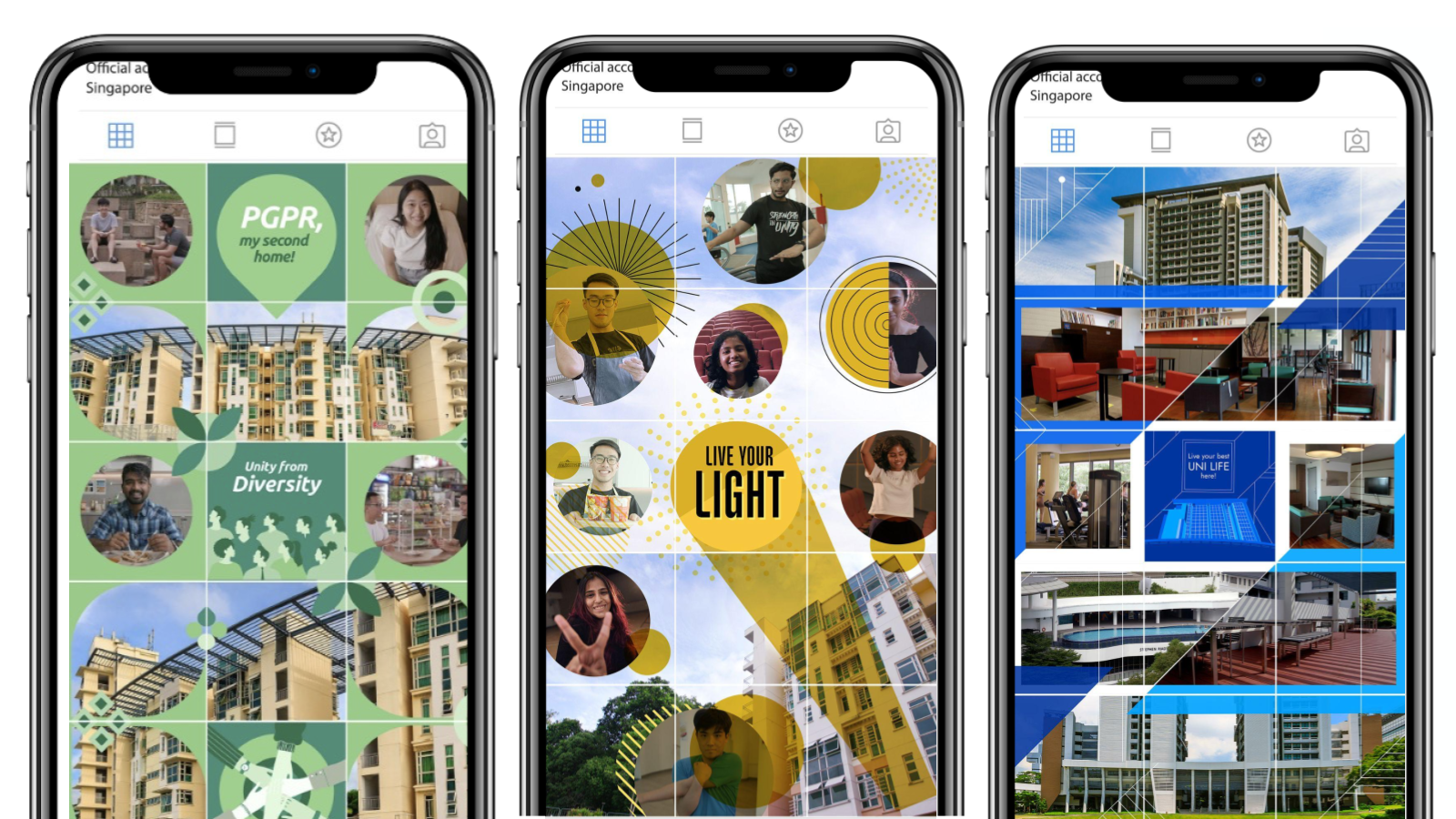
Three NUS hostels rebranded with a mobile-first, social-first identity, built for how students actually encounter a brand: on a feed, on a phone, on the day they choose where to live.
TÜV SÜD
Our longest client relationship: since 2009 we've produced hundreds of brand and product marketing assets with TÜV SÜD's teams, keeping a global testing and certification brand coherent across campaigns, markets, and years.
Why Us
Why Construct Digital
Anyone can design a logo. The harder job is an identity that stays distinctive and stays consistent, for years. Here's how we get you there.

Strategy before styling.
We settle what the brand stands for before anything gets drawn: the narrative, the personality, the tone of voice the visuals will have to carry. SGX Cares had a mission and a rallying idea before it had a mark. When the thinking comes first, the design has something to be right about.

Designed for B2B distinctiveness.
B2B categories drift toward the same blue, the same abstract graphics, the same stock handshake. We design against the category, not into it, because in a considered purchase the brand a buyer can recognise and recall is the one that makes the shortlist.

A system, not just a mark.
A logo is one decision. An identity is hundreds: type, colour, layout, photography, iconography, and how they behave together on every surface from a proposal to a booth. We design the system so each new asset is an application of the identity, never a reinvention of it.

AI-ready guidelines, not a PDF on a shelf.
The deliverable is a working toolkit: clear rules, worked examples, and templates, structured so both your team and your AI tools can read and apply them. More and more of your content will be produced with AI in the loop; guidelines only humans can interpret leave the brand unguarded exactly where the volume is. Ours govern both.

Built for where brands live now.
Identities get met on feeds and phones before they're ever seen on paper, so we design mobile-first and social-first, the way we rebranded three NUS hostels for students who decide everything from a screen. If the identity doesn't hold at feed size, it doesn't hold.

The craft is human. The rollout is accelerated.
The identity itself is designed by people, and stays that way. Where AI earns its keep is the rollout: adapting the approved system across the hundreds of assets a brand needs, faster and with fewer consistency slips. TÜV SÜD has trusted us with that kind of volume since 2009.
How We Work
Scoped to what your brand needs
Some brands need a refresh, some need building from the ground up, and some need a sub-brand that sits well inside a bigger house. We scope to the job, not a package.
Brand audit & direction
where every engagement starts
We review your brand across every touchpoint and against your category, and come back with an honest read: what to keep, what's drifted, and whether the job is a refresh, a rebuild, or a new sub-brand. You get a clear direction and scope before committing to the full engagement.
Identity build
Strategy, visual system, guidelines, and templates, scoped to a refresh, a full rebuild, or a sub-brand. The engagement ends with your team equipped and trained, not dependent on us.
Rollout & brand care
as far as you need us
Where wanted, we stay on to roll the identity out across your assets and act as brand custodian over time, the way we've kept TÜV SÜD coherent across hundreds of assets since 2009.
This pairs naturally with Content & Creative Production for the ongoing asset build, Brand Campaigns when the new identity should launch with a bang, and COMPASS when the brand and the website need rebuilding together.
Got Questions
Brand Identity & Guidelines FAQs
The strategy layer (narrative, personality, tone of voice), the visual system (logo and lockups, typography, colour, layout principles, photography and illustration direction), and the operational layer: guidelines, templates for your most-used assets, and training for the team who'll apply it. The scope flexes with the job, but those three layers are always in play.
Usually a refresh. Most established B2B brands have equity worth keeping; the problem is drift and inconsistency, not the brand itself. The audit at the start of every engagement answers this honestly: NTU PACE needed a refresh with proper guidelines, while SGX needed a new sub-brand built from scratch. We recommend the smaller job when the smaller job is right.
They have to answer real production questions, not just state rules. Ours pair every rule with worked examples, ship with ready-to-use templates, and come with training for the people applying them. They're also structured to be AI-readable, so the brand agents and AI tools your team increasingly produces with follow the same rules a designer would. A guideline only a designer can interpret gets ignored by everyone, and everything, that isn't one.
Yes. Sub-brands need their own clear mission and identity while visibly belonging to the parent, which is a balancing act. SGX Cares is the reference: a CSR sub-brand with its own mission, narrative, and rallying idea, "Better Happens Together", built to live comfortably inside the SGX house.
The system is built so you don't need us: guidelines, templates, and a trained team. Where clients want us to stay on, we act as brand custodian, producing and reviewing assets over time. TÜV SÜD has run that way with us since 2009, across hundreds of assets, and the brand still holds together.
The identity itself, the thinking and the craft, is human work and stays that way. AI earns its place in two ways: the rollout, where it adapts the approved system across the volume of assets a brand needs, and the guidelines themselves, which we structure to be AI-readable so your own tools stay on-brand too. Creative decisions stay with people; the machines just follow the rules properly.
Ready to Begin
Make your brand unmistakable.
Tell us where your brand stands and where it's drifting, and we'll come back with an honest read: what to keep, what to fix, and whether the job is a refresh, a rebuild, or something new.